

In today’s fast-moving workplaces, keeping a close eye on physical assets is no longer a luxury — it is a fundamental aspect of sound business practice. Whether you manage a bustling office, a manufacturing floor, or a healthcare facility, asset tracking through well-designed asset tags offers a straightforward yet powerful way to protect your organisation’s resources and reinforce physical security at every level.
Key takeaways
- Asset tags serve as a powerful visual deterrent against theft by signaling that equipment is tracked and accounted for.
- Tamper-evident and destructible labels help detect unauthorized interference and simplify the identification of missing items.
- Advanced technologies like RFID, Bluetooth, and NFC enable real-time monitoring and location tracking of high-value equipment.
- Assigning unique tags to equipment fosters a culture of accountability by linking assets to specific individuals or departments.
- Durable tagging materials ensure long-term legibility and security in diverse working environments, from offices to industrial sites.
- Integrating tagged assets with cloud-based management software streamlines the audit process and improves overall inventory accuracy.
- A robust asset tracking system helps reduce unnecessary expenditure by facilitating better maintenance scheduling and identifying underutilized resources.
How asset tags strengthen physical security and deter unauthorised access
Visible Identification as a Front-Line Deterrent Against Theft and Misuse
One of the most immediate benefits of asset labels is their visibility. When equipment is clearly marked with a unique identifier, whether through a barcode, a QR code, or an RFID chip, it sends an unambiguous message: this item is tracked and accounted for. Research suggests that more than half of workers have, at some point, taken something from their employer, making this visual deterrent far more significant than many organisations realise. A well-placed, tamper-evident label that displays a distinctive pattern upon removal — or a destructible vinyl label that breaks apart if interfered with — makes opportunistic theft considerably more difficult and far easier to detect.
Beyond deterrence, security labelling also helps organisations respond swiftly when an incident does occur. With each asset uniquely identified, tracing the movement of a missing item becomes a structured process rather than a guessing game. This level of asset identification is particularly valuable for high-turnover environments where equipment changes hands regularly.

Tracking movements of high-value equipment across your premises
Modern equipment tagging has evolved well beyond simple printed stickers. Technologies such as RFID tags, Bluetooth asset tracking, and NFC technology now allow organisations to monitor the precise location and condition of assets in real time. Bluetooth-enabled tags, for instance, continuously send status signals to a central service, enabling facilities managers to pinpoint the whereabouts of valuable equipment without manual checks. RFID technology, meanwhile, allows passive monitoring through microchips that store specific asset information, making it possible to scan large volumes of items rapidly and accurately.
NFC technology deserves particular mention for its accessibility and ease of deployment. NFC tags are small, cost-effective devices that communicate wirelessly using radio waves, and they require no additional hardware or software to operate. They can be read by a standard smartphone, meaning your team can log an asset’s location, condition, and maintenance history on the spot — reducing the reliance on manual data entry and the errors that come with it.
Improving workplace accountability and asset management through tagging
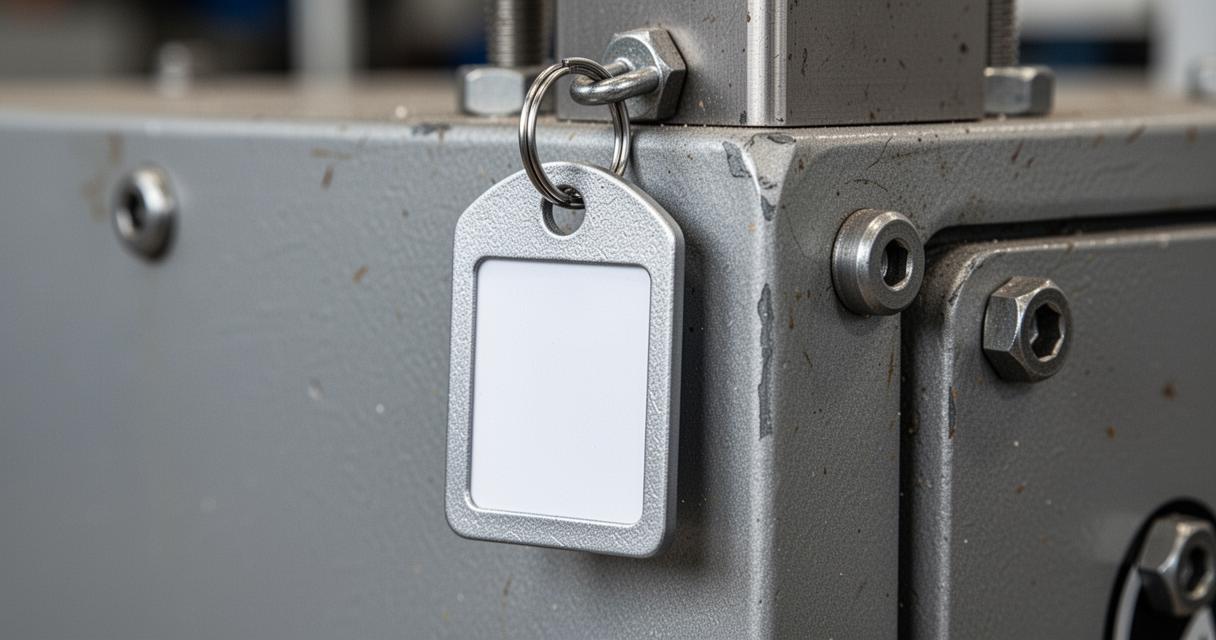
Assigning Clear Ownership and Responsibility to Every Tagged Item
A consistent asset management programme built around durable asset tags creates a culture of accountability throughout an organisation. When every piece of equipment is assigned a unique tag and linked to a responsible individual or department, the ambiguity that often leads to loss or misuse simply disappears. Materials such as anodised aluminium, polyester, and polycarbonate offer varying degrees of durability suited to different environments — from outdoor industrial settings to climate-controlled offices — ensuring that tags remain legible and securely fixed throughout the asset’s working life.
Tamper-resistant stickers and write-and-seal asset tags add an additional layer of protection by making unauthorised removal immediately apparent. This not only discourages theft but also reinforces the sense of individual responsibility that is essential to effective inventory management.

Streamlining Audits and Reducing Losses With a Reliable Asset Registry
Perhaps one of the most compelling operational advantages of property identification through asset tags is the transformation it brings to the audit process. With a comprehensive tagging system linked to cloud-based asset management software, organisations can access up-to-date asset records from anywhere, generate automated reports, and receive real-time notifications when items are moved or require maintenance. This dramatically reduces the time spent on manual stocktakes and improves inventory accuracy across the board.
QR code tracking and barcode labels integrate seamlessly with modern tracking software, allowing staff to update asset records instantly using a mobile device. Conducting a thorough audit before tagging assets in the first instance is strongly recommended, as it ensures the registry is built on accurate, reliable data from the outset. Over time, this approach supports better asset maintenance scheduling, helps organisations identify underutilised equipment, and ultimately reduces unnecessary expenditure — making the case for equipment tagging as both a security measure and a sound financial decision.